Field Guides / On-Call and Incident Response
Field Guide · Intermediate to Advanced · 10-12 hours with labsIncident Response and Postmortems
Run incidents calmly, mitigate before you diagnose, and write blameless postmortems that change things, with 15 hands-on labs on kind.
76
pages
pages
15
hands-on labs
hands-on labs
20
interview Q&As
interview Q&As
13
chapters
chapters
This is for you if
- You carry a pager, or you're about to, and want a calm, repeatable way to handle the 3 a.m. page
- You're the person who fixes everything and want to turn that into a process your whole team can run
- You lead or build an on-call program and need severity levels, rotations and postmortems that work
- You're preparing for SRE, platform or DevOps interviews where incident stories are guaranteed
What's inside
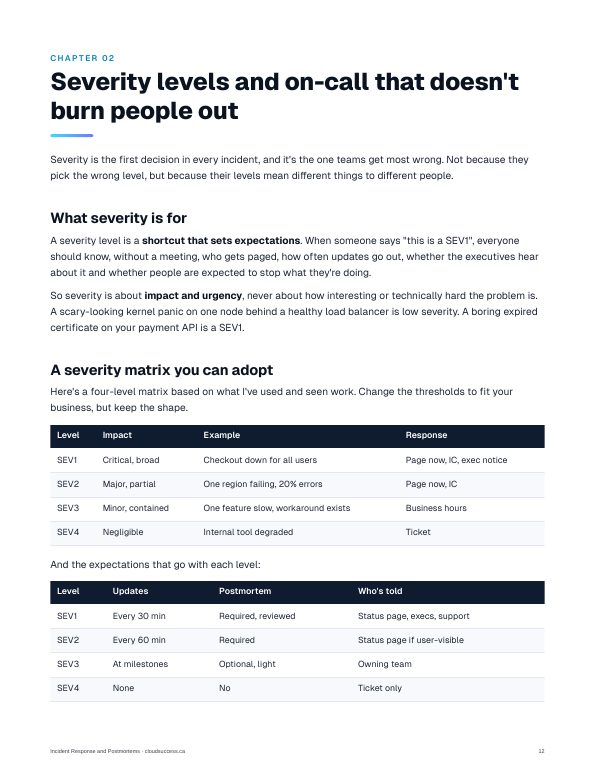
- A severity matrix tied to SLO burn rates, plus on-call rotation design that people can sustain
- The incident commander, ops, comms and scribe roles, with handover and sync scripts
- Ready-to-use status page, stakeholder update and handoff templates
- A first-five-minutes and first-hour playbook, including evidence capture before you mitigate
- Mitigation levers practised on a live cluster: rollback, feature flag kill switch, failover and load shedding
- A structured method for debugging under pressure, drilled against four hidden faults
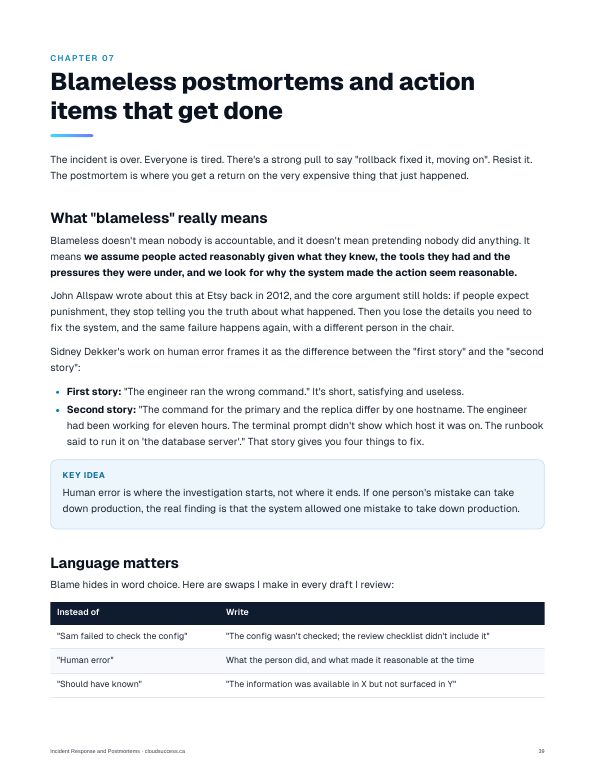
- A blameless postmortem template, contributing factors instead of root cause, and the trouble with five whys
- Accurate breakdowns of the Cloudflare 2019, Facebook 2021 and CrowdStrike 2024 outages and what to copy from them
- Game days with Chaos Mesh and manual fault injection, runbooks, honest incident metrics and 20 interview Q&As
After this guide you can
- Declare, command and communicate an incident from page to resolution with clear roles
- End user impact quickly with rollback, flags, failover or load shedding before you know the cause
- Debug production faults on Kubernetes with a structured, hypothesis-driven loop
- Write blameless postmortems with action items that have owners, dates and a real chance of getting done
- Plan and run a game day or a full simulated incident with your team
- Answer senior-level incident response interview questions with judgment, not heroics
Contents
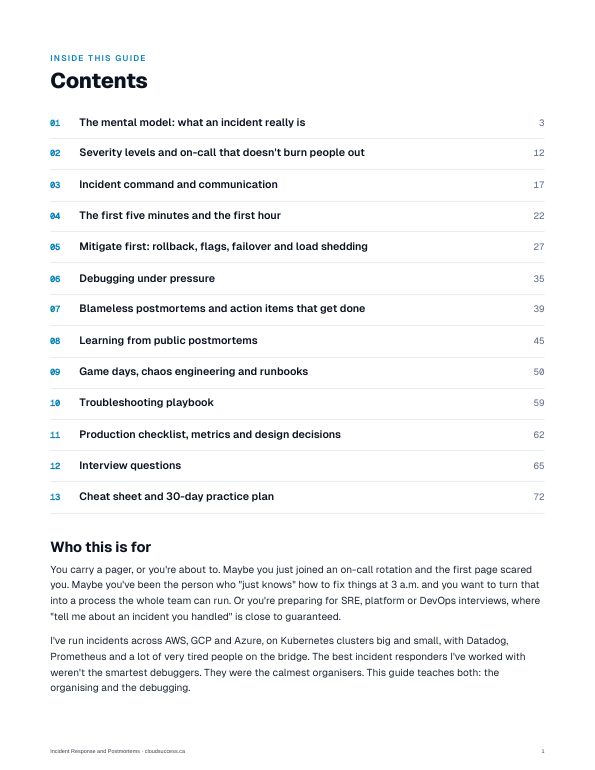
- The mental model: what an incident really isp. 3
- Severity levels and on-call that doesn't burn people outp. 12
- Incident command and communicationp. 17
- The first five minutes and the first hourp. 22
- Mitigate first: rollback, flags, failover and load sheddingp. 27
- Debugging under pressurep. 35
- Blameless postmortems and action items that get donep. 39
- Learning from public postmortemsp. 45
- Game days, chaos engineering and runbooksp. 50
- Troubleshooting playbookp. 59
- Production checklist, metrics and design decisionsp. 62
- Interview questionsp. 65
- Cheat sheet and 30-day practice planp. 72
Written by Randy, a Senior Platform Engineer & SRE who runs production platforms on AWS, GCP and Azure. Companion to the Techworld with Randy episode On-Call and Incident Response.