How to Make Your Resume Bullets Pop
The exact formula recruiters and ATS systems respond to, 25 real before/after rewrites for DevOps and SRE roles, how to quantify impact when you don't have exact numbers, and a full resume structure template.
What you get
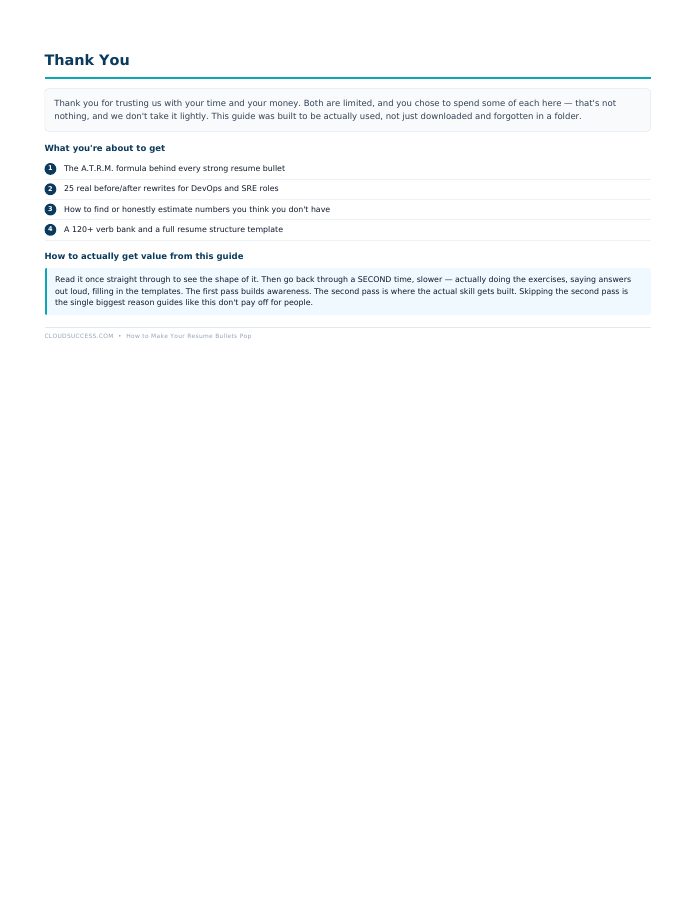
- The A.T.R.M. formula behind every strong resume bullet
- 25 real before/after rewrites for DevOps and SRE roles
- How to find or honestly estimate numbers you think you don't have
- A 120+ verb bank and a full resume structure template
- ATS formatting rules that actually matter
- The 1-page resume rule: what to cut first
What's inside
- Why Most Resume Bullets Fail
- The Formula: A.T.R.M.
- 25 Real Before/After Rewrites
- How to Quantify Impact Without Exact Numbers
- The Action Verb Bank (120+ Verbs, Organized)
- ATS Formatting Rules That Actually Matter
- The Complete Resume Structure Template
- A Full Before/After Resume Section, Rewritten
- The 1-Page Resume Rule: What to Cut First
A look inside: Why Most Resume Bullets Fail
The single most common pattern across thousands of DevOps and SRE resumes: bullets describe RESPONSIBILITY instead of RESULT. "Responsible for managing Kubernetes infrastructure" tells a recruiter what your job title implies — it tells them nothing about whether you were good at it.
The tell: if a bullet could be copy-pasted onto a coworker's resume in the exact same role and still be 100% accurate, it's describing the job, not your performance in it.
The fix: every bullet should answer "so what happened because of this?" — a number, a system that got faster/safer/cheaper, or a concrete outcome that wouldn't have happened without you specifically.
How to Make Your Resume Bullets Pop: Mastery Edition
The A.T.R.M. formula, explained with real diagrams instead of just told to you — 35 before/after rewrites, the verb bank, ATS rules, a full resume teardown, and the quantifying method for when you swear you don't have a number.